

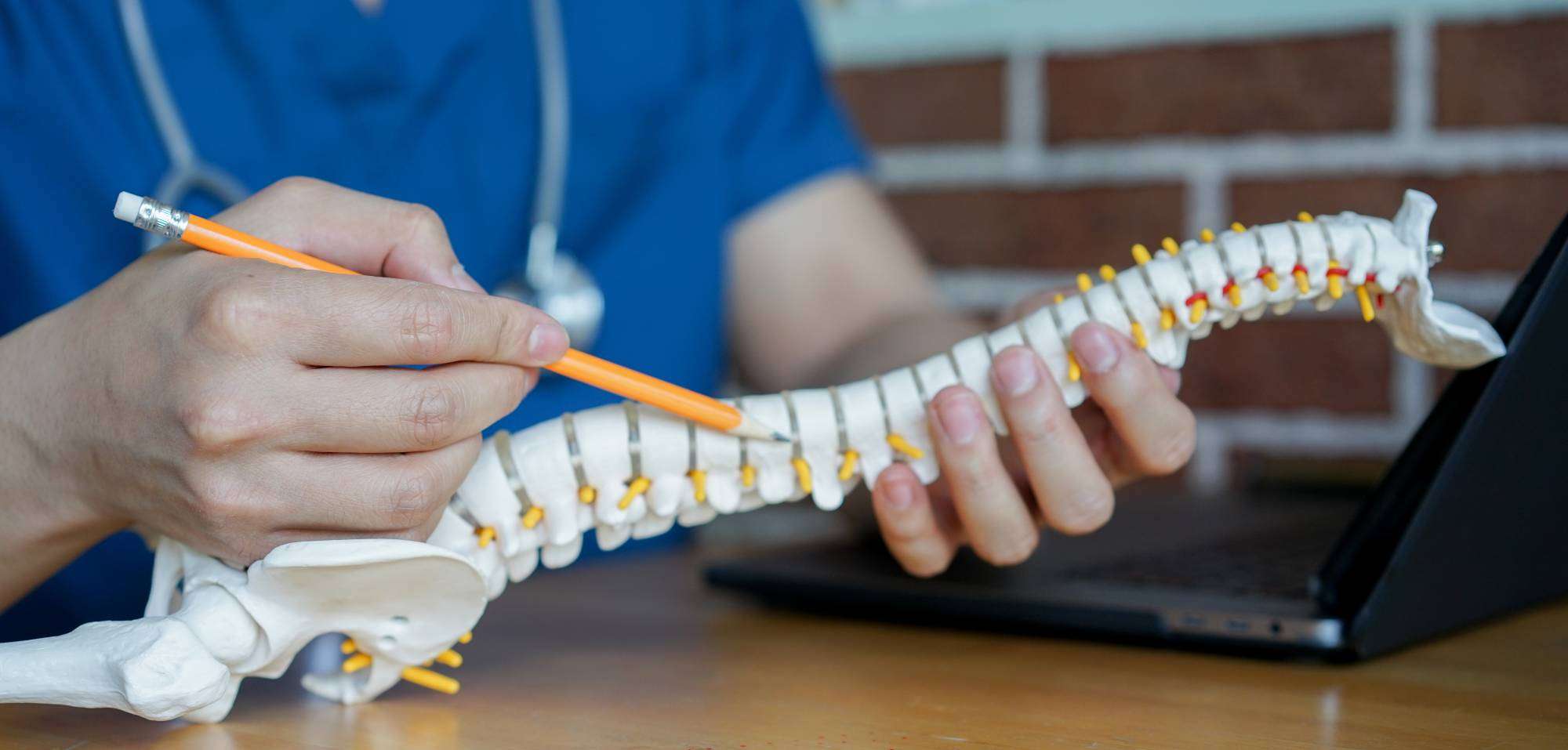
When changes in posture become noticeable, many people start searching for kyphosis vs. scoliosis to understand what may be happening with the spine. Both conditions are types of spinal curvature and can affect the way someone stands, but they involve the spine bending in different directions. This difference influences how each condition is diagnosed, monitored, and treated.
Scoliosis is a relatively common spinal condition, affecting an estimated 2% to 3% of the U.S. population, according to the American Academy of Orthopedic Surgeons. As more people seek evaluation for spinal curvature concerns, knowing which condition is present helps families have more informed conversations and ask the right questions early.
This blog explains what each condition is, how clinicians tell them apart, and why the distinction guides treatment decisions.
Quick Answer
Kyphosis is an exaggerated front-to-back rounding of the upper back in the sagittal plane. Scoliosis, on the other hand, is a sideways curve of the spine in the coronal plane, usually with rotation. Clinicians distinguish them by the plane of curvature.
What Is Kyphosis?
Kyphosis is an excessive outward curvature in the sagittal plane, the front-to-back direction. It commonly affects the thoracic curve region, producing the rounded or hunched upper back look many people recognize.
Kyphosis can appear in different forms, such as:
- Postural kyphosis is flexible and commonly linked to habits like slouching, allowing the curve to improve when posture changes.
- Scheuermann’s kyphosis involves permanently wedged vertebrae, which means the curve does not correct through posture adjustments alone.
Common hunched back causes may include poor posture, changes that occur during growth, and age-related wear on the spine. Since each cause affects the spine differently, evaluation and monitoring plans can vary based on the type and severity of the curve.
What Is Scoliosis?
Scoliosis refers to the sideways curve of the spine in the coronal plane. It is frequently accompanied by vertebral rotation. That rotation helps separate structural scoliosis from a simple postural asymmetry, which does not involve a true twist in the bones.
It is usually identified during adolescence, with studies estimating that adolescent idiopathic scoliosis affects around 1.2% of adolescents. This makes early detection during the growth years especially important.
Some of the common signs of scoliosis in teenagers include:
- Uneven shoulders or waist
- One shoulder blade sticking out more than the other
- A visible lean to one side
- A rib prominence when bending forward
Did you know?
The severity of scoliosis is typically evaluated using the Cobb angle, which is measured through spinal imaging. This measurement helps clinicians determine the degree of curvature and track changes in the spine over time.
Kyphosis vs. Scoliosis: Side-by-Side
Kyphosis and scoliosis are both spinal curvature conditions, but they differ in the direction of the curve, visible signs, and how they are typically assessed. Here’s a table that highlights their differences:
| Feature | Kyphosis | Scoliosis |
| Curve direction | Forward bending of the spine in the sagittal plane | Sideways curvature of the spine in the coronal plane |
| Common appearance | Rounded or hunched upper back | Uneven shoulders, uneven waist or rib prominence |
| Rotation | Typically does not involve spinal rotation | Frequently involves spinal rotation |
| Screening approach | Usually evaluated through visual posture assessment | Commonly screened with the Adam’s forward bend test |
| Measurement | Measured with the Cobb angle in the relevant plane | Measured with the Cobb angle in the relevant plane |
Rounded Shoulders vs. Scoliosis
Differentiating between rounded shoulders vs. scoliosis starts with understanding the direction of the spinal change. Rounded shoulders and a forward posture are usually linked to changes in the sagittal plane, similar to kyphosis.
They affect how the upper body is positioned from the side. Scoliosis, on the other hand, involves a sideways curve of the spine and may appear as uneven shoulders, an uneven waist, or asymmetry when viewed from the back.
While posture changes can look similar at first glance, they are not the same condition. The pattern and direction of the curve help distinguish them, and a proper evaluation with a physical examination and imaging may be needed for an accurate diagnosis.
How Clinicians Tell Them Apart
Clinicians follow a structured evaluation process to identify the type of spinal curve present. The assessment usually begins with a physical examination, where posture and spinal alignment are reviewed from different angles.
The Adam’s forward bend test is a common screening method that helps reveal a coronal curve and signs of rib rotation as the patient bends forward. If an abnormality is detected, imaging is used to confirm the diagnosis and measure the degree of curvature.
Self-diagnosis can be misleading. A proper evaluation identifies a spinal deformity based on its type, location, and severity, providing details that cannot be determined through a mirror check alone.
Why the Difference Matters for Treatment
The two curves occur in different planes, which means they are evaluated and managed in different ways. This distinction influences the entire care plan, from regular monitoring to possible interventions.
Treatment options can range from observation and bracing to surgery, depending on the curve type, severity, and individual factors. Outcomes differ from patient to patient, making long-term expectations an important part of treatment discussions.
Surgical approaches also vary based on the condition being treated. Anterior Scoliosis Correction (ASC) is one motion-preserving surgical option that may be considered for eligible scoliosis patients.
Pro tip: Families reviewing common questions about scoliosis surgery before a consultation can benefit from knowing the curve type first, as it helps clarify which treatment options may apply.
Frequently Asked Questions
Q: Can you have both kyphosis and scoliosis at the same time?
Yes. Some patients present with curves in both planes. A clinician evaluates each one separately, since a sagittal curve and a coronal curve carry different implications for care.
Q: Is a hunched back always kyphosis?
Not necessarily. Hunched back causes vary, and rounded posture can be flexible or postural rather than a fixed structural curve. Only an assessment confirms whether a true curve is present.
Q: What are early signs of scoliosis in teenagers?
Watch for uneven shoulders or waist, a shoulder blade sticking out, or leaning to one side. These signs warrant a professional evaluation.
Q: How is each condition measured?
Both are typically assessed via the Cobb angle, applied in the relevant plane. Kyphosis is measured in the sagittal plane, while scoliosis is measured in the coronal plane.
Final Thoughts
Understanding whether a spinal curve is kyphosis or scoliosis helps create a clearer picture of what is happening and what steps may come next. Although both conditions can change posture and spinal alignment, they differ in the direction of the curve and the way they affect the spine. Kyphosis creates a forward rounding of the upper back, while scoliosis involves a sideways curve that may also include vertebral rotation.
A proper evaluation is the starting point for identifying the type and severity of a curve and exploring the right care options. The Institute for Spine & Scoliosis provides specialized evaluation and treatment for spinal conditions, including scoliosis and kyphosis, with a focus on advanced techniques that help preserve spinal movement and back function. Led by experienced orthopedic spine surgeons, our team also offers Anterior Scoliosis Correction (ASC), a motion-preserving alternative for eligible scoliosis patients.
If you or your child has concerns about a spinal curve, request a consultation with our specialists to discuss your condition and available treatment options.
